
Free Eye of Unity Movie Playlist: https://eyeofunity.com/free-movies
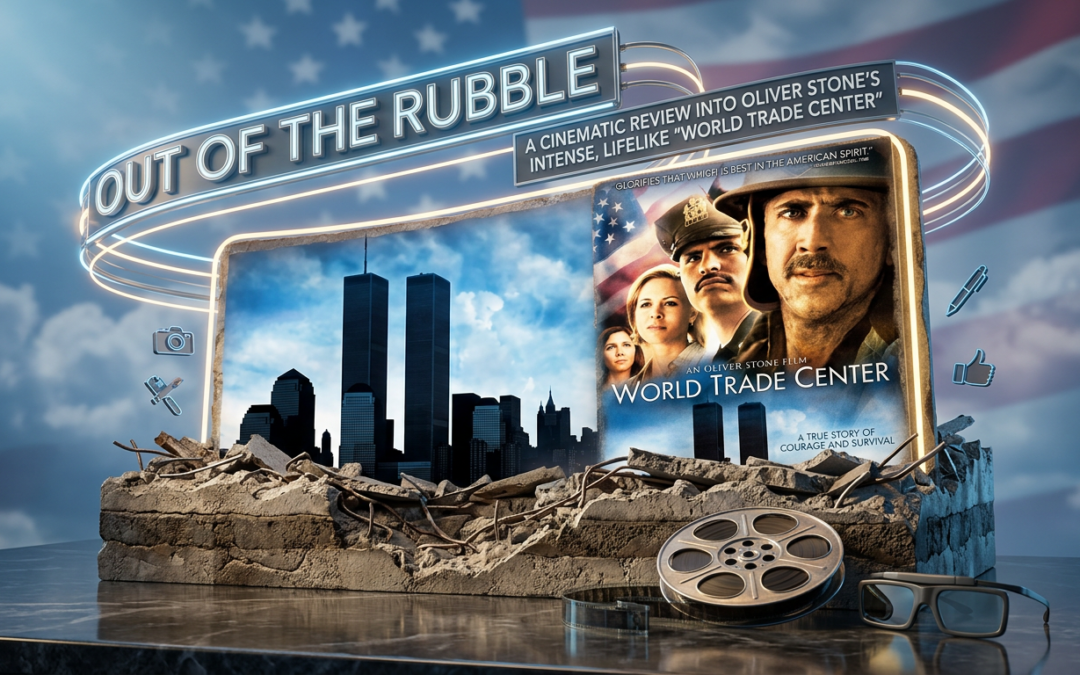
When searching for movies that encapsulate the sheer gravity of human resilience, you inevitably arrive at titles that force us to examine our collective history. Among the vast array of films available today, one hidden gem ready to be experienced is currently streaming as a part of Eye of Unity’s Free Youtube Movie Collection. That film is none other than Oliver Stone’s World Trade Center. Starring Academy Award winner Nicolas Cage and the incredibly talented Michael Peña, the movie offers an unforgettable true story of the courageous rescue and survival of two Port Authority policemen. These men were trapped beneath thousands of tons of steel and concrete on September 11, 2001, after volunteering to step into the epicenter of chaos.
Before diving into the harrowing, intense, and grippingly lifelike narrative that Stone crafts, do yourself a favor: queue up the movie right here on YouTube and prepare for an emotional journey. Good Morning America’s Joel Siegel rightly raved that this is a film “about heroism and the best in all of us.” We are about to unpack exactly why this movie remains an essential watch, breaking down its incredible realism, its divergence from Stone’s typical cinematic flair, and the deeply human core that drives its pulse.
The Calm Before the Unimaginable
Every disaster film or historical recreation faces the daunting challenge of setting the stage. How do you portray a world that is completely oblivious to the tragedy about to unfold? Oliver Stone answers this with a masterclass in understated realism. The film opens in the predawn hours of a seemingly unremarkable Tuesday. It’s early. The city is just waking up. Stone gives us a montage of ordinary New Yorkers starting their day—a commuter on a train, a school bus driver looking in her rearview mirror, the sun slowly cresting over the iconic Manhattan skyline.
We hear a mundane but chillingly authentic radio broadcast setting the time and temperature: [02:17] “Give us 22 minutes. We’ll give you the world. Good morning. 64 degrees. It is Tuesday and here’s what’s happening.” This simple line of dialogue is agonizing in its innocence. The audience possesses the terrible burden of hindsight, knowing exactly what this gorgeous, crisp September morning will become.
We are introduced to Sergeant John McLoughlin (Nicolas Cage), a weary but dedicated veteran of the Port Authority Police Department. He commands a team that includes the eager rookie Will Jimeno (Michael Peña) and a diverse cast of fellow officers. Their banter in the locker room and during roll call is authentic and lighthearted. They discuss weekend baseball games and poke fun at each other’s cheap shorts. It is a brilliant narrative choice by Stone to linger on these everyday moments. It anchors the film in absolute reality. When the first explosive rumbling is felt in the streets [08:46], the transition from normalcy to apocalyptic terror is jarring, instantaneous, and intensely gripping.
Into the Belly of the Beast: The Ascent and the Fall
Once the realization hits that this is not a small commuter plane but a catastrophic attack, the atmosphere completely changes. The confusion among the officers mirrors the historical record. Theories bounce around the staging area—is it a private plane? Did someone lose control? But as the officers pile into a commandeered bus and head toward the Twin Towers, the gravity of the situation begins to set in.
Sergeant McLoughlin, drawing on his experience from the 1993 World Trade Center bombing, quickly selects his team. The tension in the air is palpable as he calls off the names [10:13]. The men are not portrayed as fearless superheroes; they are ordinary, working-class men stepping into an absolute nightmare because it is their job, and because people need help. This is the crux of the movie’s thematic power.
Stone’s decision to avoid showing the planes actually striking the towers is a controversial yet profoundly respectful choice. By 2006, those images were permanently burned into the global consciousness. Instead, Stone keeps the camera tightly focused on the human perspective on the ground. We see the horror reflected in the eyes of onlookers, and we hear the terrifying, booming sound design. When the team enters the concourse between the towers to gather rescue equipment, the world suddenly ends.
The collapse sequence is one of the most intense, visceral, and terrifying moments ever committed to film. Stone captures the sensory overload of the buildings coming down—the deafening roar of millions of tons of concrete, glass, and steel crashing downward, the violent trembling of the ground, and the suffocating rush of pulverized dust blocking out the sun. McLoughlin, Jimeno, and a few others barely have time to dive into an elevator shaft before the concourse is obliterated.
A Departure for Oliver Stone
Oliver Stone is famous (and sometimes infamous) for his macro-level, highly political, and often conspiratorial films like JFK, Platoon, and Wall Street. Audiences expected a 9/11 film from Stone to be a fiery political statement. Instead, he delivered a strictly micro-level, apolitical story of survival. “This is not a political movie,” Stone insisted during the film’s release. By stripping away the geopolitical context and focusing solely on the men in the rubble, Stone crafted an intimate survival epic that merges the memory of that day with the claustrophobic dread of a disaster film.
Trapped: The Claustrophobic Heart of the Narrative
The majority of World Trade Center takes place in a setting that is physically restrictive and emotionally suffocating. John McLoughlin and Will Jimeno find themselves pinned beneath a mountain of debris. They are immobilized, severely injured, and plunged into terrifying darkness.
This is where the film transitions from an epic disaster movie into a profoundly intimate psychological drama. Filming in the cramped confines of twisted metal and concrete slabs, with the air thick with debris, Stone creates a visual and auditory nightmare. The groaning, creaking sounds of the unstable rubble shifting above them serve as a constant, terrifying reminder that their makeshift tomb could collapse completely at any second. It is a grueling, lifelike depiction of being buried alive.
Here, the performances of Nicolas Cage and Michael Peña truly shine. Cage, known for his eccentric, larger-than-life performances, exercises incredible restraint. Pinned in such a way that he can barely move his head, Cage must convey a universe of pain, fear, leadership, and regret using only his face and voice. His portrayal of McLoughlin is deeply moving—a stoic, seasoned cop who realizes he might have taken his family for granted.
Peña’s Will Jimeno is the emotional counterweight. As a rookie, Jimeno is more openly terrified and talkative. To keep themselves from falling asleep and succumbing to shock or internal bleeding, the two men talk. They talk about everything and nothing. They discuss their wives, their unborn children, and mundane pop culture. This dialogue, rooted in the actual transcripts and interviews of the survivors, grounds the movie in an intense realism. At one point, Jimeno even experiences a pain-induced hallucination of Jesus offering him a bottle of water—a surreal touch that highlights the delirium caused by their extreme trauma.
The Agony of the Unknown: The Wives’ Perspective
While the men fight for their lives beneath the rubble, Stone deftly cuts away to the families waiting in the suburbs. Maggie Gyllenhaal plays Allison Jimeno, Will’s pregnant wife, and Maria Bello plays Donna McLoughlin, John’s wife. These scenes are essential, providing a broader emotional context and preventing the narrative from becoming entirely suffocating.
The wives represent the collective trauma of thousands of families on that day. They are subjected to the torture of the unknown. Gyllenhaal captures the frantic, pacing energy of a woman whose world has suddenly stopped making sense, while Bello portrays a quiet, paralyzing dread. The film shows how normal life abruptly fractures. We see Donna McLoughlin grappling with mundane regrets—wondering if they loved each other enough, or if the disconnect of everyday routine had pulled them apart.
In a particularly poignant, dreamlike sequence, John, fading in the rubble, has a vision of Donna [01:49:06]. In his mind, she is urging him to get up and come home, playfully chiding him about their unfinished kitchen. John whispers in agonizing defeat, “I can’t. I can’t get out of here.” It is a heartbreaking moment that strips away the uniform and leaves only a husband desperate to see his family one last time.
The Rescuers: A Testament to Human Goodness
As day turns into night, the hope of rescue dwindles. The site, later known as Ground Zero, is a treacherous landscape of burning fires, toxic smoke, and unstable steel. The official rescue operations are halted for the night due to the extreme danger. But this is where the theme of the film—the best in all of us—takes center stage.
Enter Dave Karnes (played with stoic intensity by Michael Shannon), an ex-Marine accountant who, upon watching the towers fall, feels a righteous, unshakable calling. He gets a haircut, puts on his old uniform, and drives to the site, slipping past the police barricades. Karnes, alongside another first responder, Jason Thomas, begins walking across the burning, apocalyptic ruins, calling out into the darkness.
The moment Karnes hears Jimeno’s faint cries for help is a cinematic triumph. The ensuing rescue operation is a painstaking, dangerous endeavor involving firefighters, paramedics, and police officers working frantically to remove the heavy steel pinning the men. When they finally extract Jimeno and, much later, McLoughlin, the sense of relief is overwhelming.
The rescue scenes are chaotic, dirty, and triumphant. The camaraderie among the emergency workers, many of whom have just lost hundreds of their own brothers in the collapse, is a testament to the resilience of the human spirit. The film highlights how ordinary people from all over the country rushed to help, beautifully illustrated by the inclusion of paramedics who drove all the way from Wisconsin to hand out food and lend a hand.
Cinematic Craft: How Stone Builds the Tension
Oliver Stone’s directorial choices in World Trade Center are subtle but highly effective. The lighting inside the rubble pit is phenomenal. The men are bathed in an eerie, hellish glow from the fires burning above them, punctuated only by the occasional beam of a rescuer’s flashlight piercing through the dust.
The sound design deserves immense praise. In a movie where the protagonists cannot move, the auditory experience becomes paramount. The deafening silence following the collapse is slowly replaced by the horrific sounds of the building settling, the distant wail of sirens, and the terrifying realization of isolation. Every creak of metal sounds like a death sentence.
Furthermore, Stone handles the passage of time masterfully. The film spans approximately 24 hours, but inside the rubble, time loses its meaning. Through careful pacing and the deteriorating physical conditions of the characters, the audience truly feels the agonizingly slow crawl of the hours.
Legacy and Relevance Today
More than a decade and a half after its release, World Trade Center remains a vital piece of cinema. In the immediate aftermath of 9/11, the world was saturated with political discourse, anger, and a drive for retribution. This film chose a different path. It asked us to remember the individuals. It asked us to remember that behind the staggering statistics were real people—fathers, husbands, rookies, and veterans—who went to work on a Tuesday and found themselves at the gates of hell.
In the film’s closing monologue, John McLoughlin (in a voiceover) reflects on the duality of that day [01:58:24]: “9/11 showed us what human beings are capable of. The evil, yeah, sure. But it also brought out a goodness we forgot could exist. People taking care of each other for no other reason than it was the right thing to do.” This thesis statement is what elevates the film from a mere disaster survival story to an inspiring testament to humanity.
While some critics argued upon its release that the film was too narrow in its focus or too soon to process the trauma, history has been kind to World Trade Center. By avoiding the geopolitical minefield, it achieved a timeless quality. It is a monument to the first responders, an intimate portrait of survival, and a reminder of the unifying power of compassion in the face of unimaginable darkness.
Conclusion: An Essential Viewing Experience
If you are looking for a film that is profoundly realistic, unapologetically emotional, and incredibly well-crafted, World Trade Center is a must-watch. It eschews Hollywood action tropes for gritty, claustrophobic reality, carried by two deeply authentic performances by Nicolas Cage and Michael Peña. Oliver Stone delivers a restrained, beautiful tribute that will leave you breathless, reflective, and ultimately uplifted by the sheer willpower of the human spirit.
Do not miss the opportunity to experience this masterpiece. You can watch it completely free via Eye of Unity’s Free Youtube Movie Collection right here: https://eyeofunity.com/free-movies. Set aside a couple of hours, prepare yourself for an intense journey, and bear witness to a story that proves even in our darkest hours, there is light to be found.
Discover more from System Ent Corp
Subscribe to get the latest posts sent to your email.